
How to Choose the Right Acrylic Pool Design for Your Dubai Home
Quick Answer: How to Choose an Acrylic Pool Design in Dubai
To choose the right acrylic pool design in Dubai, match the design to your property’s structure and space, then verify four things: panel thickness certified by an engineer, UV-stabilised acrylic suited to Dubai’s climate, approvals from your community developer and the relevant authority, and a contractor with proven installed projects. Cantilever and glass-wall pools suit villas with views, rooftop pools suit penthouses and commercial buildings, and infinity-edge designs suit waterfront or elevated plots.
What Is an Acrylic Pool, and Why Is It Popular in Dubai?
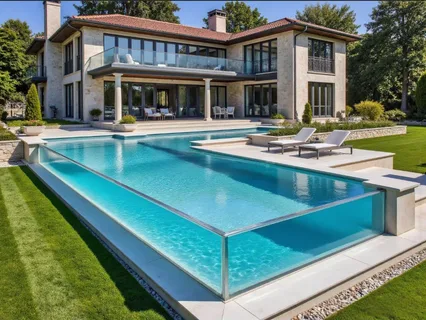
An acrylic pool uses thick, transparent panels made of PMMA (polymethyl methacrylate) as one or more walls or sections of the pool. Unlike ordinary glass, acrylic can be cast in large, thick, seamless sections and bonded together, which allows dramatic features: a see-through wall, a cantilevered edge, or a transparent bottom.
In Dubai, acrylic pools have become a signature feature for several reasons:
- Architecture that rewards statement features. Villas in communities such as Emirates Hills, Palm Jumeirah, and Dubai Hills Estate often compete on design, and a glowing acrylic pool is memorable.
- Tight plots and vertical living. Rooftop and terrace pools make sense where land is scarce.
- Entertaining culture. A pool that is visible from a majlis, lounge, or basement bar becomes part of the home’s social space.
- Visual clarity. Acrylic transmits light very well, so water appears bright and vivid by day and luminous when lit at night.
Acrylic is not a decorative shortcut, however. It is an engineered structural material, and the design you choose determines how safely and reliably it performs for decades.
How to Choose the Right Acrylic Pool Design for Your Dubai Home
7 Factors to Consider Before Choosing Your Design
1. Property type and available space
Start with the site. A standalone villa with a garden has room for a freestanding feature pool with a viewing wall. An apartment terrace, penthouse, or rooftop is limited by floor loading and edge geometry. A commercial property, such as a boutique hotel, clubhouse, or restaurant, has to consider guest flow, sightlines, and safety.
Ask yourself what the pool is for. Swimming laps, family play, entertaining, and visual impact lead to different designs.
2. Structural load and engineering
Water is heavy, and acrylic pools concentrate loads at the panel supports. Any design, especially a cantilever or rooftop pool, needs calculations from a qualified structural engineer. The supporting structure, the concrete shell, and the building itself (for terraces and rooftops) must all be assessed.
Request the engineering drawings and calculations before approving a design. A contractor who cannot provide them is a red flag.
3. Panel thickness and clarity
Panel thickness depends on water depth, panel height and width, and the span between supports. Deeper water exerts more pressure, which requires thicker acrylic. There is no universal number, and thickness should always come from engineering calculation, not a rule of thumb or a sales claim.
Ask which acrylic grade the contractor uses, whether it is UV-stabilised, and how clarity is maintained over time. Quality panels are cast, polished, and bonded to precise tolerances.
4. Climate: heat, UV, and humidity
Dubai’s sun and summer temperatures put acrylic and the pool system under real stress. Consider:
- UV exposure: choose UV-stabilised material and confirm the manufacturer’s warranty terms for outdoor use.
- Water temperature: unshaded pools can become uncomfortably warm in summer, so a chiller is often a practical addition. Factor it into both design and running costs.
- Thermal movement: materials expand and contract with temperature, and a good design accounts for this in joints and sealing.
- Shade and orientation: a pergola, a sail, or smart positioning protects both swimmers and materials.
5. Budget and lifetime cost
Acrylic pools typically cost more than conventional concrete pools because of material, specialist fabrication, engineering, and installation. Compare quotes on a like-for-like basis and ask what is included: panels, structure, waterproofing, filtration, lighting, cooling, and finishes.
Then think about the lifetime cost: energy for pumps and chillers, water treatment, polishing and inspection of the panels, and eventual resealing. A cheaper quote with weak specifications can cost more over time.
6. Regulations and community approvals
In Dubai, approvals can involve several parties depending on where the property is:
- Dubai Municipality or the relevant authority for the area (in some zones, Trakhees or the Dubai Development Authority)
- Your master developer or community (for example Emaar, Nakheel, or Meraas communities), which often require a No Objection Certificate (NOC) and design review
- Your consultant/engineer, who submits drawings and structural documentation
Rules differ by community and project, so confirm requirements with the authority and your community management before finalising a design. A reputable contractor should guide you through this process.
7. Maintenance and warranty
Acrylic can scratch if cleaned improperly, so the right tools and cleaning methods matter. Ask the contractor for a written maintenance guide, including how often the panels should be inspected and who is responsible for polishing and resealing. Get warranty terms in writing, covering both materials and workmanship, and read the exclusions.
How to Choose the Right Acrylic Pool Design for Your Dubai Home
Popular Acrylic Pool Designs Compared
Cantilevered/overhanging pools
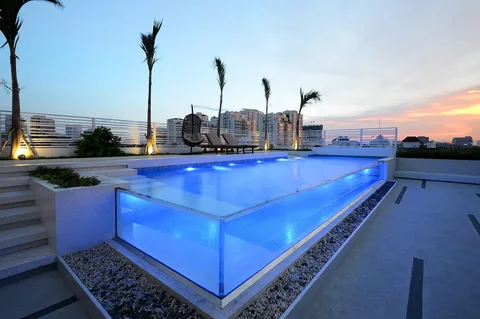
The pool projects beyond the building or terrace edge, with an acrylic base or wall that makes swimmers appear to float. It delivers the highest visual drama and demands the most rigorous engineering. Best for villas or buildings with a view and a structure designed to carry the load.
Glass-wall (viewing window) pools
One wall of the pool is acrylic, visible from a lounge, gym, bar, or lower terrace. It is a versatile choice for villas and commercial venues. It adds indoor-outdoor connection but needs careful thought about privacy and sightlines.
Infinity-edge acrylic pools
The water appears to merge with the horizon or skyline, and an acrylic wall or panel can be added for a see-through effect. Ideal for waterfront, golf-course, or elevated plots where the view is the asset.
Rooftop and balcony pools
These make use of vertical space, especially in penthouses and boutique buildings. Weight and waterproofing are the critical constraints, and building approvals are usually more involved.
Indoor, basement, and underwater-lounge pools
An acrylic wall links a pool with a basement lounge, spa, or entertainment room. These work well where outdoor heat limits use, though they require careful ventilation and humidity control.
Commercial and hospitality pools
Hotels, restaurants, clubhouses, and developers use acrylic features to create a signature attraction. Designs here must also meet higher occupancy and safety requirements.
Acrylic vs. Glass vs. Concrete Pool: Which Is Right for You?
| Factor | Acrylic | Glass | Conventional Concrete |
|---|---|---|---|
| Transparency | Excellent, with minimal visual distortion | Good, but may have a green tint | None |
| Panel size/thickness | Can be cast thick and in large, seamless sections | Limited by laminated panel sizes | Not applicable |
| Design flexibility | High (curves, large spans) | Moderate | Very high for shape, none for transparency |
| Scratch resistance | Lower, but can be polished | Higher | Not applicable |
| Upfront cost | High | High to very high | Lowest |
| Maintenance | Careful cleaning, periodic polishing | Easier surface care | Standard tile/plaster upkeep |
| Best for | Statement features, viewing walls, cantilevers | Smaller windows, specific architectural settings | Traditional, budget-conscious pools |
Acrylic is generally preferred for large transparent sections because it can be manufactured in thick, seamless pieces. Specifications vary by supplier, so confirm technical details with your contractor.
How Much Does an Acrylic Pool Cost in Dubai?
There is no single price, because the cost depends on size, panel dimensions and thickness, structure, site conditions, finishes, and the equipment you choose. As a general principle, expect an acrylic feature to add a significant premium over a standard concrete pool, and expect cantilever or rooftop projects to sit at the high end.
Main cost drivers:
- Acrylic panel size and thickness
- Structural and engineering work (especially for cantilever and rooftop pools)
- Site access and logistics (large panels need cranes and careful handling)
- Filtration, chillers, heating, and automation
- Lighting and finishes
- Permits, consultant fees, and NOC costs
Permits and Approvals in Dubai
Before construction starts, you will generally need approved drawings and any required permits from the relevant authority and your community or master developer. Typical steps:
- Confirm the rules with your community management.
- Appoint a consultant or engineer to prepare drawings and structural calculations.
- Submit for approvals (and obtain an NOC where required).
- Obtain permits before construction begins.
- Complete inspections and handover documentation.
Requirements vary by location and project, so always verify current procedures with the authorities rather than relying on a general guide.
How to Choose an Acrylic Pool Contractor in Dubai
Look for a contractor who can show:
- A portfolio of completed acrylic projects, ideally in Dubai’s climate, that you can visit or verify
- Engineering capability, meaning in-house or partner structural engineers and documented calculations
- Material transparency, including the acrylic supplier, grade, and UV stabilisation
- Clear warranty terms in writing
- Experience with approvals, including your community’s process
- After-sales support, such as maintenance plans and panel polishing
Ask direct questions: Who manufactures the panels? Who is liable if there is a defect? What happens if the site conditions change? Honest, specific answers are the best signal of competence.
Investor and Developer Angle: ROI and Resale Value
For real estate investors and developers, an acrylic pool is a differentiator. In a market where many villas offer similar amenities, a well-designed feature can improve marketing impact and help a property stand out in listings and viewings. For hospitality and commercial properties, it can become a signature attraction that supports branding and guest experience.
Be realistic, though. Value depends on the quality of design and construction, the property’s location and price tier, and buyer taste. Over-specifying a pool in a mid-market property may not return its cost. Consider your target buyer or guest first, then decide how bold the feature should be. Also factor in maintenance obligations when you plan for tenants, managers, or a sale.
Common Mistakes to Avoid
- Choosing by looks alone, without structural and site assessment
- Ignoring Dubai’s summer, leaving out shade or cooling
- Skipping the community NOC process, which can cause costly delays
- Comparing quotes with different scopes, leading to hidden extras
- Overlooking privacy, since a viewing wall can expose the pool to neighbors or other rooms
- Neglecting maintenance planning, especially panel care and inspection
- Hiring on price alone, when a very low quote may signal thinner specifications
FAQs
How thick should acrylic pool panels be?
Thickness is determined by engineering calculation based on water depth, panel dimensions, and support spacing. Deeper water and larger spans need thicker panels, so always request the engineer’s calculations rather than a generic figure.
Are acrylic pools safe?
Yes, when properly engineered, manufactured, and installed. Safety depends on correct panel thickness, quality material, professional bonding, and a structure designed for the loads. Choose contractors who provide documentation and inspections.
How much does an acrylic pool cost in Dubai?
Costs vary widely with size, panel specification, structure, and site conditions. Acrylic features usually cost more than standard concrete pools, and cantilever or rooftop designs cost the most. Request itemised quotes for an accurate figure.
Do acrylic pools turn yellow or crack in the UAE sun?
Quality acrylic is UV-stabilised for outdoor use, which limits yellowing. Cracking is usually linked to poor design, installation stress, or incorrect cleaning, not the material itself. Confirm UV performance and warranty terms with the supplier.
Is acrylic better than glass for a pool?
For large, transparent sections, acrylic is generally the preferred material because it can be cast thick and seamless and polished if scratched. Glass is harder against scratching but is limited by panel size and construction. Your contractor should recommend based on your design.
Do I need a permit for an acrylic pool in Dubai?
Usually yes. Approvals often involve the relevant authority and your community or master developer, including an NOC. Requirements differ by location, so confirm them before starting.
How long does an acrylic pool last?
With correct engineering, quality material, and regular maintenance, acrylic pools are designed for long service lives, often measured in decades. Actual lifespan depends on panel quality, installation, climate exposure, and care. Ask for warranty details.
Can acrylic be added to an existing pool?
Sometimes. Retrofitting a viewing panel needs structural assessment, because cutting into an existing shell changes how loads are carried. A structural engineer should evaluate feasibility first.
How do you maintain acrylic panels?
Use soft, non-abrasive cleaning tools and approved products, avoid harsh chemicals, and schedule periodic inspection and polishing by a specialist. Follow the maintenance guide supplied by your contractor.
Does an acrylic pool add resale value?
It can increase appeal and marketing impact, particularly in luxury segments, but returns vary with design quality, location, and buyer preferences. Treat it as a differentiator, not a guaranteed premium.
Conclusion
The right acrylic pool design in Dubai balances four things: a design that suits your property and lifestyle, engineering that guarantees safety, materials suited to the climate, and a contractor you can trust. Start with the use case, confirm structural feasibility, plan for approvals and lifetime costs, and compare quotes on scope as well as price.
How to Choose the Right Acrylic Pool Design for Your Dubai Home



One Response